Chia de Gracia
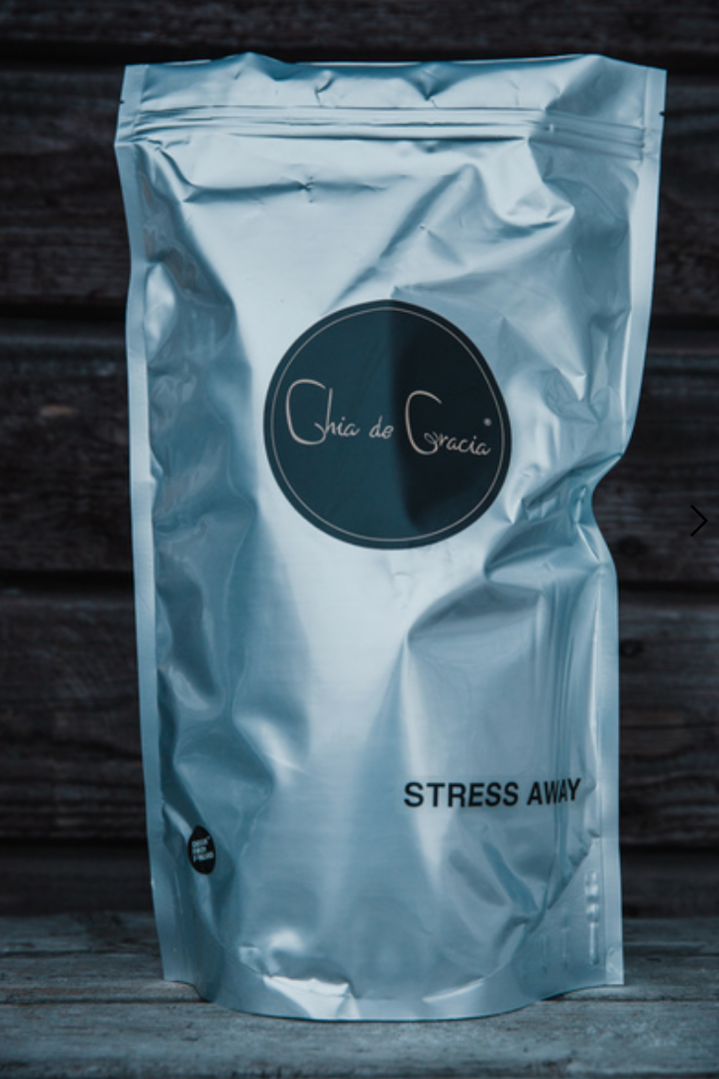
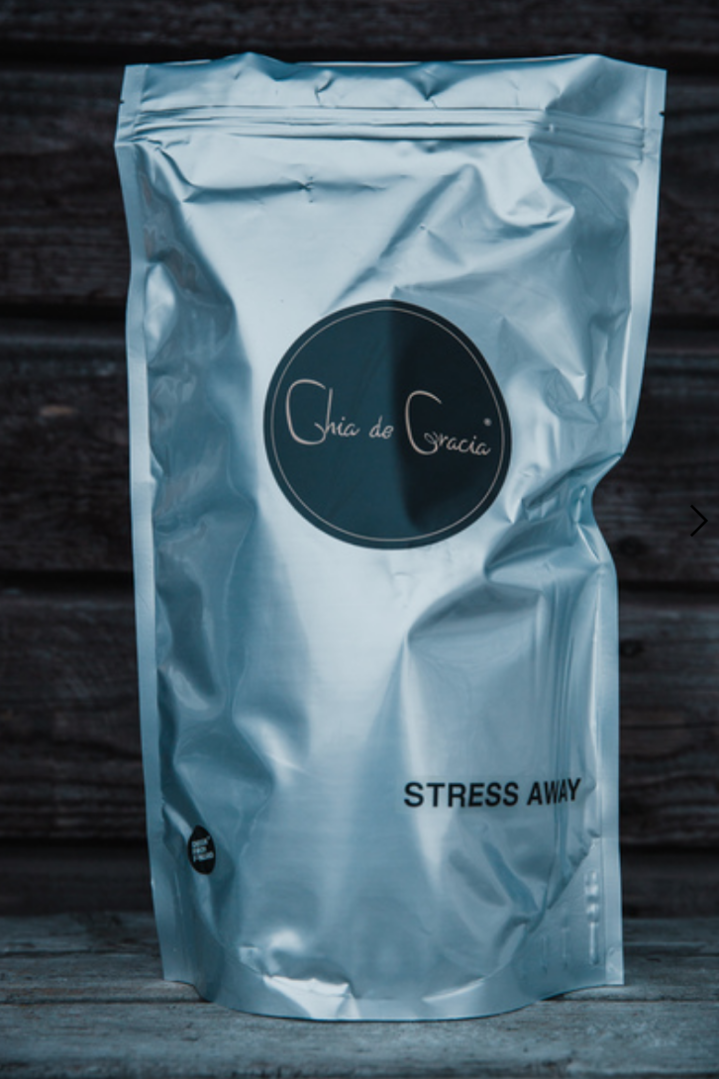
Stress Away 1,5 kg
Lieferzeit 5-7 Tage
Verfügbarkeit für Abholungen konnte nicht geladen werden
Stress Away – herbal blend for horses in varying situations
Restless? Wound up? Difficulty concentrating?
Many horse owners recognise those moments when their horse doesn't quite seem like itself.
Tension builds, there's more "fizz" in everything, and the daily rhythm just isn't quite even.
Changes in daily routine – such as transport, competitions, a change of yard, or other stress – are often first reflected in behaviour.
That's when attention naturally turns to feeding.
A natural way to bring balance to the diet
Stress Away is a 100 % natural herbal blend that brings traditionally used herbs to the diet for situations when daily life isn't quite running smoothly.
The blend is designed for moments when:
- changes occur in the daily routine
- the environment varies
- when you want to add herb-based variety to the diet
- you want to pay a little more attention to the overall picture and your horse's well-being
The world of herbs – why these ones
Stress Away is not a single herb – but a complete blend in which each plant has its own role.
Chamomile & lemon balm
Traditionally used herbs for situations where the horse's daily life is more demanding than usual.
Peppermint
A fresh and aromatic plant that brings clarity to the blend and balances the whole.
Heather & sage
Plants that have been used as part of a varied herbal diet in different situations.
Vervain
A traditional herb that adds depth to the blend.
Lavender
A recognisable, aromatic plant whose scent makes the blend pleasant.
Bee pollen
A natural nutrient package – contains protein, vitamins, minerals and trace elements, as well as compounds naturally found in plants, such as flavonoids.
When does this come up
Many reach for Stress Away when:
- during competition season
- in connection with transport
- in new environments or situations
- or in situations where the daily rhythm varies
Composition
Chamomile, lemon balm, peppermint, heather, sage, vervain, bee pollen, lavender, and a pinch of love 🧡
Dosage
Horse 500 kg:
3/4 – 1,5 dl / day
1 dl ≈ 20 g
At a dosage of one decilitre, the package lasts approximately 75 days.
Not recommended for pregnant animals.
Average nutritional values / 100 g
Energy 8 MJ/kg
Crude protein 15 %, Crude fat 3,5 %, Crude fibre 23 %, Ash 7 %, Moisture 7 %, Sugar 6 %
*** Anti-doping screening (FCS/HSPS)
This product has been analysed using FCS/HSPS screening methods for selected contaminants and substances that are monitored in international competition.
FCS screening focuses specifically on conventional feed raw materials and covers several known risk substances, such as caffeine, theobromine, morphine, scopolamine, theophylline, atropine, and hordenine.
HSPS screening is designed for plant- and herb-based raw materials, where the variation in natural compounds is greater, and it extends the analysis to cover several other similar substances, such as reserpine, ephedrine, and capsaicin.
Screening is part of product quality management and transparency in situations where competition use requirements are also taken into account in feeding.
Analysis certificates available upon request.
Background information and studies
The raw materials in the Stress Away product have been examined in studies particularly from the perspective of equine senses, behaviour, and feeding.
Aromatic plants, such as lavender and chamomile, have been studied in relation to horses' sense of smell and physiological markers. Studies have described changes in, among other things, heart rate variability and behaviour when horses were exposed to different scents.
The use of herbs as part of equine feeding has also been examined in practical feeding studies, where they were found to be suitable as part of normal feeding without affecting eating behaviour.
Plants such as lemon balm, peppermint, lavender, and sage naturally contain aromatic compounds, polyphenols, and other components naturally found in plants, which are part of their natural composition.
The studies primarily describe the connection between the horse's senses, environment, and feeding – i.e. factors that are part of the horse's normal behaviour and daily life.
References
McBride, S.D., Hemmings, A. (2005)
A neurologic perspective of equine stereotypy.
Applied Animal Behaviour Science.
Hothersall, B., Nicol, C.J. (2009)
Role of diet and environment in equine behaviour.
Applied Animal Behaviour Science.
Fureix, C., et al. (2012)
Exploring the links between behaviour and welfare in horses.
PLoS ONE.
Aromatic plants and the sense of smell
Ferguson, D.L. et al. (2013)
The effect of lavender aromatherapy on stress responses in horses.
Journal of Equine Veterinary Science.
Heitman, K. et al. (2018)
Olfactory stimulation and behavioural responses in horses.
Equine Veterinary Journal.
Use of herbs in equine feeding
Durmic, Z., Blache, D. (2012)
Bioactive plants and plant products in animal nutrition.
Animal Feed Science and Technology.
Makkar, H.P.S. et al. (2014)
Herbs and plant secondary metabolites in animal feeding.
Animal Feed Science and Technology.
Plant compounds (polyphenols, flavonoids, essential oils)
Panche, A.N., et al. (2016)
Flavonoids: an overview.
Journal of Nutritional Science.
Bakkali, F. et al. (2008)
Biological effects of essential oils.
Food and Chemical Toxicology.
Bee pollen (nutritional content)
Campos, M.G.R. et al. (2008)
Pollen composition and standardisation of bee pollen.
Journal of Apicultural Research.
The studies primarily cover equine behaviour, the sensory environment, and the compounds contained in plants and their role in animal feeding.
Teilen