

Chia de Gracia
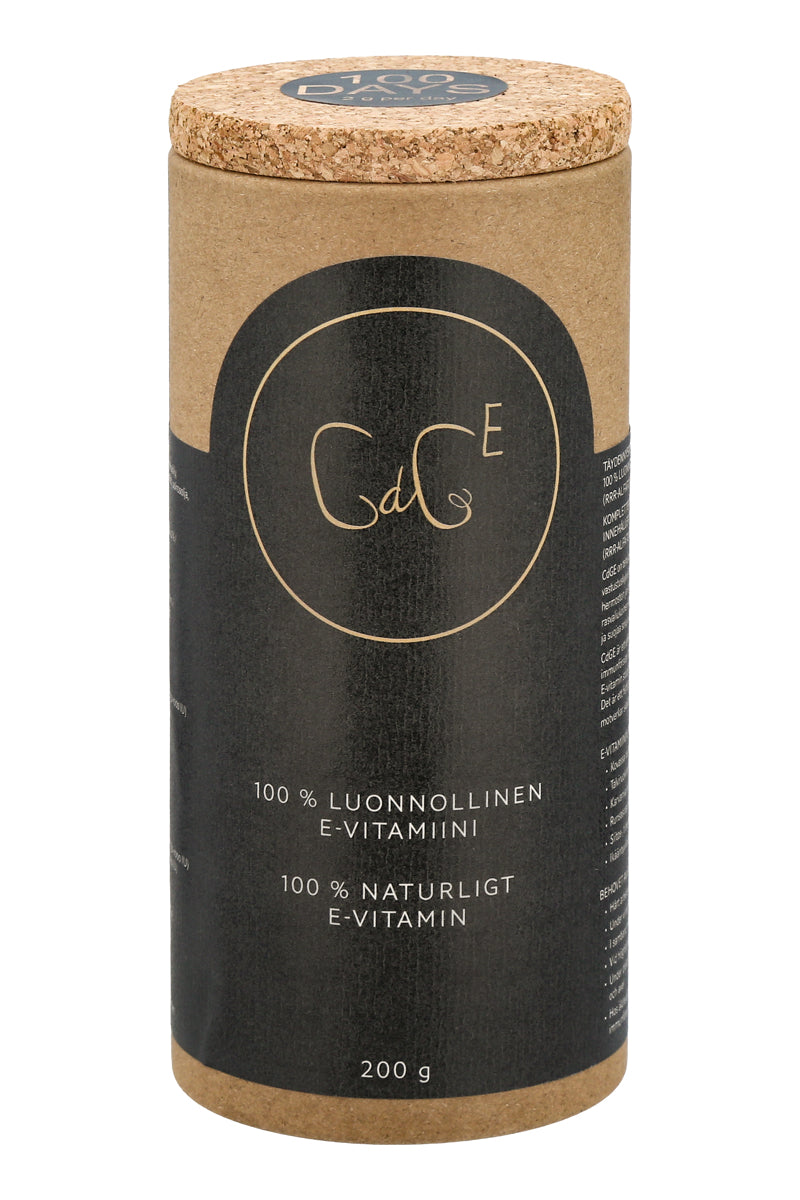
New CDGE: Natural vitamin E for horses
Delivery time 5-7 days
Couldn't load pickup availability
100% Natural vitamin E for horses and dogs
The new powdered form is a fully equivalent product to the old liquid CdGE product.
CDGE HAS BEEN REFORMULATED DUE TO CHANGES IN FEED LEGISLATION! Read more->
100% natural vitamin E for horses & dogs. Vitamin E supports, among other things, the function of muscles, the nervous system and the maintenance of immune resistance.
CdGE is a completely natural vitamin E. Vitamin E is one of the fat-soluble vitamins required by the body.
- Vitamin E acts as an antioxidant in the horse's and dog's body, protecting cells from the harmful effects of free radicals (e.g. lactic acid caused by physical exertion).
- Vitamin E is needed, among other things, to maintain the normal function of muscles and the nervous system and to support the immune defence.
- Natural vitamin E also supports the normal function of skin and joints and, according to studies, is absorbed more than twice as effectively as synthetic vitamin!
- Vitamin E can be used to support energy metabolism and muscle function in connection with rhabdomyolysis. Exertional rhabdomyolysis is the most common form of tying-up in competition horses.
- Horses obtain vitamin E from pasture grass and from feeds containing vitamin E. During the winter season, the retention of vitamin E in dry hay is poor, and therefore it should be added to the horse's diet daily. Every horse needs vitamin E unless it receives fresh grass daily.
Those with a particular need for additional vitamin E include:
- Heavy exercise and competing increase the body's need for vitamin E. Heavy physical work places strain on muscles, tendons and joints and causes an imbalance between cell-oxidising and cell-protecting factors. This imbalance damages cells and therefore the need for vitamin E increases, for example, when exercise intensity increases (sport horses and dogs). Vitamin E can be used to support preparation for and recovery from athletic performance.
- The need for vitamin E increases if the horse's / dog's diet is high in fat.
- Animals that are breeding, pregnant and lactating also have an increased need for vitamin E.
- Vitamin E is also recommended for ageing horses & dogs to support immune resistance.
- Vitamin E is also important for animals suffering from Cushing's disease.
- Various skin irritations, injuries and scars may benefit from vitamin E. Vitamin E also benefits dry, flaky skin and protects it from damage. Vitamin E has been scientifically (1) shown to improve the condition of patients with skin problems; skin changes such as skin lesions, redness, skin thickening and hair loss are reduced.
-
Dietary vitamin E supplementation is beneficial in situations involving low-grade inflammation. These situations include, among others, various disorders caused by skin dryness, joint problems and heavy physical exertion.
Dosage:
-
During the indoor feeding season for all horses
: 1,5-2 g (750-1000 IU) - Young horses (under 1 year old): 3-4 g (1500-2000 IU)
- Sport horses under heavy exercise 3-6 g (1500-3000 IU)
- Broodmares during the last month of pregnancy 3-4 g (1500-2000 IU)
- Horses on oil-supplemented diets during the pasture season
- 1/2-1 gram / day, if the amount of oil is less than 3 dl. (250-500 IU)
- Those receiving more than 3 dl of oil: 1-1,5 g / day. (approx. 500-750 IU)
1 measure 2,5 ml = 1.5 g (750 IU), 1 gram = 500 IU -
Adult dog:
- light exercise 1/2 gram (250 IU) / day,
- demanding exercise 1 gram (500 IU) / day,
- breeding dogs 1-1,5 grams (500-750 IU) / day.
Vitamin E is given together with regular feed. Vitamin E is used as a course or according to veterinary recommendation. Complementary feed for horses & dogs.
Composition: RRR-alpha-tocopheryl acetate, sunflower oil, silicon dioxide.
Nutrients: crude fat 99,9%, crude protein 0%, crude fibre 0%.
Additives: nutritional additives:
Vitamin E (RRR-alpha-tocopheryl acetate)
CdGE contains natural alpha-tocopherol 500 IU/g.
According to studies, natural vitamin E is more than twice as effective compared to synthetic preparations.
CdGE is a trademark TM of Chia de Gracia.
The product is GMO-free.
Studies:
(1) Plevnik Kapun A, Salobir J, Levart A, Tavčar Kalcher G, Nemec Svete A, Kotnik T.
Vitamin E supplementation in canine atopic dermatitis: improvement of clinical signs and effects on oxidative stress markers. Vet Rec.2014
A Comparative Review of Vitamin E and Associated Equine Disorders (Finno et al., 2012)
Share