

Chia de Gracia
CdG HEMP: Cold Pressed Hemp Seed Oil for Dogs
Delivery time 5-7 days
Couldn't load pickup availability
CdG HEMP, Finnish hemp oil for dogs
Finnish cold-pressed hemp seed oil is a nutritional supplement for skin and coat as well as normal musculoskeletal function as part of a balanced diet.
Fats as part of the diet
Plant fats and oils are an excellent way to complement the diet of dogs. Fat is not only a source of energy, but also an important part of the dietary fatty acid composition.
Hemp oil is rich in omega fatty acids (3, 6 and 9), gamma-linolenic acid (GLA) and natural vitamin E. In hemp oil, the omega fatty acids are in a ratio (3:1) that corresponds well to the distribution to be considered when evaluating the dietary fatty acid balance.
Essential fatty acids
The most common plant-based omega-3 fatty acid is alpha-linolenic acid (ALA), and among omega-6 fatty acids, linoleic acid (LA). These are essential fatty acids that the body cannot produce on its own.
Fatty acids are part of the normal structure of skin and coat and of the overall diet when considering adequate fatty acid intake. Linoleic acid belongs to the omega-6 fatty acids and is one of the key fatty acids in the diet.
Hemp oil also contains gamma-linolenic acid (GLA), which is part of the omega-6 fatty acid group and relates to the dietary fatty acid composition.
Fatty acids are an essential part of the overall diet of dogs – they are part of the normal structure of cell membranes, tissues and joints. When the dietary fatty acid composition is balanced, this is also reflected in the body's fatty acid profile. Therefore, adequate intake and the correct ratio of fatty acids are a small but meaningful part of a well-considered diet.
When to use hemp oil
Hemp oil is a nutritional supplement especially when you want to add fat to the diet and complement the fatty acid composition. It is also suitable for situations where the balance between carbohydrates and fat in the diet is being considered.
Hemp oil naturally contains antioxidants such as vitamin E, which is part of the body's normal antioxidant system. A diet containing fat provides energy and is part of the overall diet of an active dog.
Hemp oil is a good choice when you want to add energy to the diet in the form of fat. Premium cold-pressed and filtered CdGHEMP hemp oil complements the basic diet of dogs.
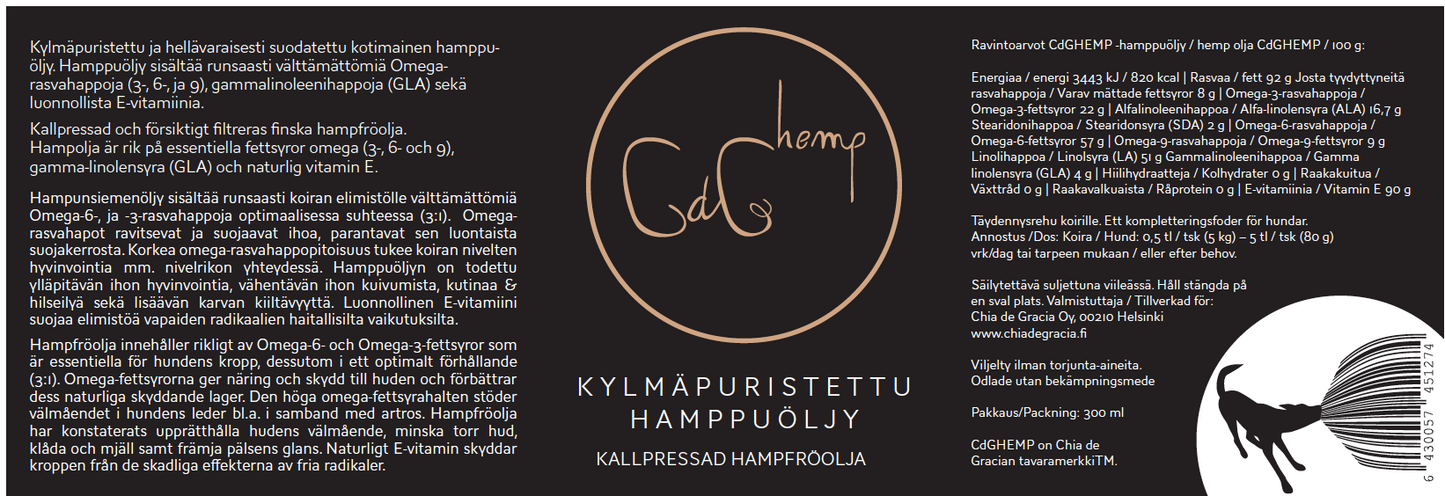
Note: Our hemp oil is packaged in a black, light-proof package that improves the shelf life of the oil. Our oil is pressed in small batches, ensuring freshness. Complementary feed for dogs. Dog: Nutritional values CdGHEMP hemp oil per 100 g Energy: 3443 kJ / 820 kcal THC content max. 0,2 % in accordance with Commission Regulation (EU) 2022/1393. Store sealed in a cool place. Grown without pesticides. CdGHEMP is a trademark™ of Chia de Gracia. ************************************************ Omega-3 and omega-6 fatty acids are a key part of the dietary fatty acid composition for dogs. Their metabolism, absorption and role in the body have been widely studied in animal nutrition research. In equine studies, the addition of omega-3 fatty acids (EPA and DHA) to the diet has altered the fatty acid profile in blood, tissues and synovial fluid . In addition, the effects of changes in dietary fatty acid composition have been examined from the perspectives of metabolism and exercise physiology . Studies have also described that omega-3 fatty acids participate in the body's normal regulatory mechanisms, in which various biologically active compounds are formed from fatty acids . In dogs, increased intake of omega-3 fatty acids (EPA and DHA) has been associated with changes in the fatty acid profile as well as nutritional responses that have been studied from the perspectives of joints, skin and general well-being . In addition, the ratio of fatty acids (omega-6 : omega-3) is a key part of the overall diet, and its significance has been described in several animal nutrition reviews . Equine studies DogsQuality and production
Dosage
0,3 dl – 3 dl / day
0,5 tsp (5 kg) – 5 tsp (50 kg) / day
Fat: 92 g
– of which saturated fatty acids: 8 g
Omega-3 fatty acids: 22 g
– alpha-linolenic acid (ALA): 16,7 g
– stearidonic acid (SDA): 2 g
Omega-6 fatty acids: 57 g
– linoleic acid (LA): 51 g
– gamma-linolenic acid (GLA): 4 g
Omega-9 fatty acids: 9 g
Carbohydrates: 0 g
Crude fibre: 0 g
Crude protein: 0 g
Vitamin E: 90 mgAdditional information
Research background on fatty acids (background information)
References
Dietary fish oil supplementation alters fatty acid composition of equine plasma and synovial fluid.
Journal of Animal Science.
The effect of dietary omega-3 fatty acids on equine metabolism and physiology.
Journal of Animal Science.
Omega-3 fatty acid supplementation and its effect on airway inflammation in horses.
Equine Veterinary Journal.
Nutrient Requirements of Horses.
National Academies Press.
Influence of n-3 long-chain polyunsaturated fatty acid supplementation on synovial fluid…
Journal of Animal Physiology and Animal Nutrition
Effects of alpha-linolenic acid on equine synovial explants
American Journal of Veterinary Research
Therapeutic use of fish oils in companion animals.
Journal of the American Veterinary Medical Association.
Effects of dietary n-3 fatty acids on fatty acid profiles in dogs.
American Journal of Veterinary Research.
Nutritional alterations and fatty acid supplementation in dogs.
Journal of Veterinary Internal Medicine.
Evaluation of the effects of dietary supplementation with fish oil omega-3 fatty acids on weight bearing in dogs with osteoarthritis.
Journal of the American Veterinary Medical Association
Share