
Chia de Gracia EN
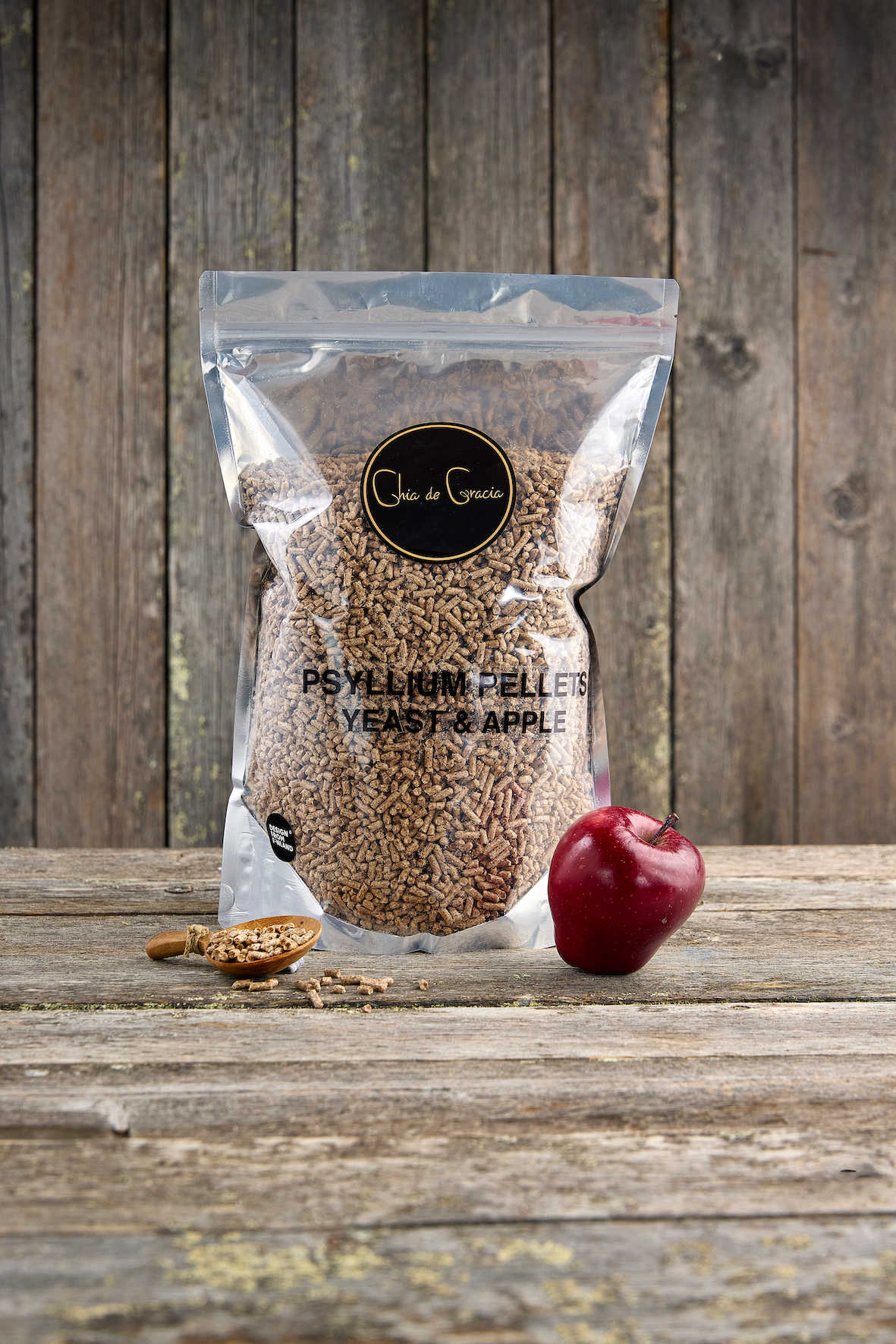
Psyllium Pellets Yeast & Apple 2 kg – for horses
Delivery time 5-7 days
Couldn't load pickup availability
CdG Psyllium Pellets Yeast & Apple
Psyllium, yeast and apple fibre – when sand accumulation needs to be considered in the diet
CdG Psyllium Pellets Yeast & Apple combines the soluble fibre of psyllium, yeast-derived Actigen® and apple fibre in an easy-to-feed pellet form.
Psyllium is an established part of equine feeding, especially in situations where the horse is exposed to sand or has a tendency to dig the ground.
The pellet form makes the product practical and easy to use.
Composition
Psyllium seed husks (Plantago ovata), apple fibre yeast fraction (Actigen®, Saccharomyces cerevisiae) and a pinch of love 🧡
Ingredients in feeding
Psyllium
Psyllium is rich in soluble fibre, which forms a gel-like mass when combined with water.
This mass travels through the intestine along with the feed mass and binds and carries fine soil particles with it.
This is why psyllium is commonly used in feeding in situations where sand may end up in the gut or if sand has already been detected.
Actigen® yeast
Actigen® is a yeast fraction derived from Saccharomyces cerevisiae yeast.
It is produced from the yeast cell wall and contains carbohydrates known as mannan-oligosaccharides (MOS), which are part of the natural structure of yeast.
MOS compounds have been studied particularly because of their structure.
They can bind to certain surface structures of bacteria, which is why they are described in research as part of the phenomenon related to bacterial adhesion.
This relates to how bacteria attach to the intestinal environment and what kind of microbial population becomes established as part of the overall diet.
MOS compounds are not rapidly fermentable fibres but rather belong to the structural carbohydrates of yeast.
Therefore, they are used in feeding as part of a fibre- and yeast-based approach, especially in long-term feeding.
MOS compounds have been examined in several studies, particularly in relation to bacterial adhesion mechanisms and as part of the overall diet of animals.
Apple fibre
Fibre derived from apple increases the total fibre content of the diet and adds natural flavour to the product.
Nutritional perspective
Fibre is a central part of equine feeding.
The soluble fibre in psyllium binds moisture and forms a mass that travels through the intestine along with the feed. Fibre-rich psyllium increases intestinal peristalsis and helps remove any accumulated soil material from the gut in a gentle and natural way.
This is why psyllium is an established part of the diet for horses kept on sand paddocks and horses that ingest sand.
High-fibre feed combinations are linked to the movement of feed mass through the intestine and to the structure of the diet.
Older horses in particular may benefit from the favourable effects of fibre-rich feeds such as psyllium or chia seeds, as they may have reduced peristalsis and consequently impaired intestinal function.
Regular use may reduce the formation of sand accumulations in the gut.
Dosage
Horse 500 kg:
– 25 g / 100 kg for 20–30 days
– 12,5 g / 100 kg for daily use
1 dl ≈ 80 g
Directions for use
Mix into the regular feed.
Always ensure adequate water intake when using psyllium.
Additional information
Sugar content max. 3 %
Background information and studies
The use of yeast-based raw materials and fibres in animal feeding has been examined in several studies.
References
-
Spring, P. et al. (2000). Mannan-oligosaccharides reduce pathogen adhesion to the intestinal lining.
-
Desrochers, A. et al. (2005). Effects of mannan-oligosaccharides on gut health and immunity.
-
Johnson, B. (2019). MOS and pathogen adhesion in horses.
-
Respondek, F. et al. (2008). Prebiotic potential of yeast-derived products in horses.
-
Wagner, A. et al. (2015). Effects of prebiotics and yeast products on equine gastrointestinal health.
Share