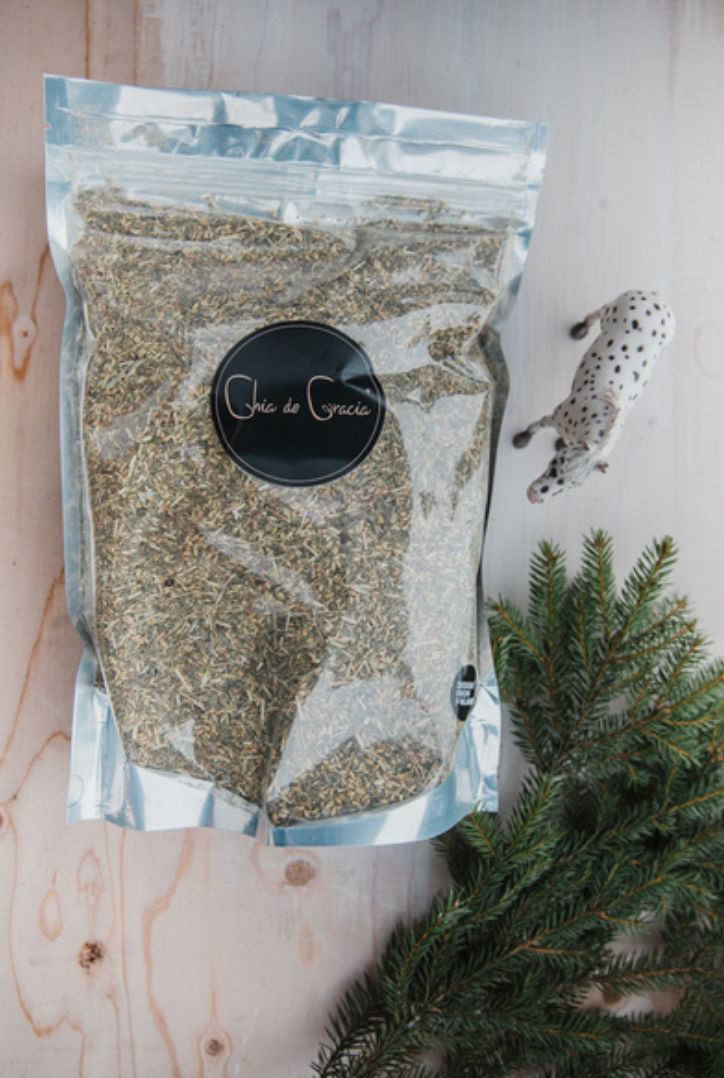

Chia de Gracia
Yarrow 500g
Delivery time 5-7 days
Couldn't load pickup availability
Yarrow – a versatile plant as part of the natural diet of horses and dogs
Yarrow (Achillea millefolium) is a versatile plant that has been traditionally used as part of the diet of humans and animals in various cultures. The plant naturally contains several beneficial nutrients as well as the plant's own compounds, making it suitable as part of a varied and balanced natural diet.
Yarrow is used in animal feeding particularly in herbal blends, where the diverse composition of plants complements the overall diet.
Nutrients contained in yarrow and their role in the diet
Yarrow naturally contains several vitamins and minerals that are part of the daily nutrient intake of horses and dogs.
Vitamin A is a fat-soluble vitamin that contributes to the normal well-being of skin and mucous membranes and to a balanced nutrient intake.
Vitamin C is a water-soluble vitamin that is part of the body's normal antioxidant system.
Manganese is a mineral that is present in the body in small amounts and participates in normal metabolic processes.
Magnesium is a mineral that is naturally found especially in muscle and nerve tissue and is part of the body's normal metabolism.
Iron is a mineral obtained from the diet to maintain normal bodily functions.
The intake of these nutrients is part of a balanced and varied diet, where different plants and raw materials complement each other.
Natural compounds in yarrow
Several dozen natural compounds have been identified in yarrow, such as flavonoids (2–15 mg/g), phenolic compounds (10–40 mg GAE/g) and essential oils (0,2–1,0 %). These are the plant's own bioactive phytochemicals and part of the plant's natural chemical structure.
The polyphenolic compounds contained in plants, together with vitamins and minerals, form a diverse nutritional whole as part of the daily diet of animals. The use of herbs is based on the natural composition and variability of plants, not on the precise dosing of individual compounds. Natural variation in content typical of natural products is possible.
Use as part of the diet of horses and dogs
Yarrow is suitable for use as part of a varied herbal diet for both horses and dogs. It can be combined with other plants, such as nettle, rosehip, or other herbs. The use of herbs in animal feeding is based on variety and the different compositional properties of plants.
Composition:
100 % yarrow (Achillea millefolium)
Dosage
Horses (approx. 500 kg):
10–20 g per day as part of the diet.
Dogs:
small–large dog: 1/2 tsp – 1 tbsp per day as part of the diet.
Measure guide:
1 dl ≈ 20 g
Nutrients (naturally occurring, approximate):
Yarrow naturally contains in the dried plant (approximately per 100 g) including iron ~ 1,4 mg, magnesium ~ 69 mg, vitamin C ~ 26 mg, calcium ~ 296 mg and potassium ~ 864 mg.
Natural variation in content typical of natural products is possible depending on the growing location, harvest, plant part, and processing.
Additional information and research background
Several scientific reviews have examined the chemical profile of the Achillea millefolium species and the phytochemical compounds contained in the plant, such as flavonoids, phenolic acids, and essential oils. In addition, the composition of essential oils has been studied in laboratory models, illustrating the diversity of the plant's bioactive components.
These publications do not directly relate to this product or animal feeding, but provide scientific background on the natural composition of yarrow.
References (background information)
A review on phytochemistry and medicinal properties of the genus Achillea
Pharmacognosy, Phytochemistry and Pharmacological Properties of Achillea millefolium L.: A Review
Phytochemistry and Evidence-Based Traditional Uses of the Genus Achillea L.: An Update (2011–2021)
Share