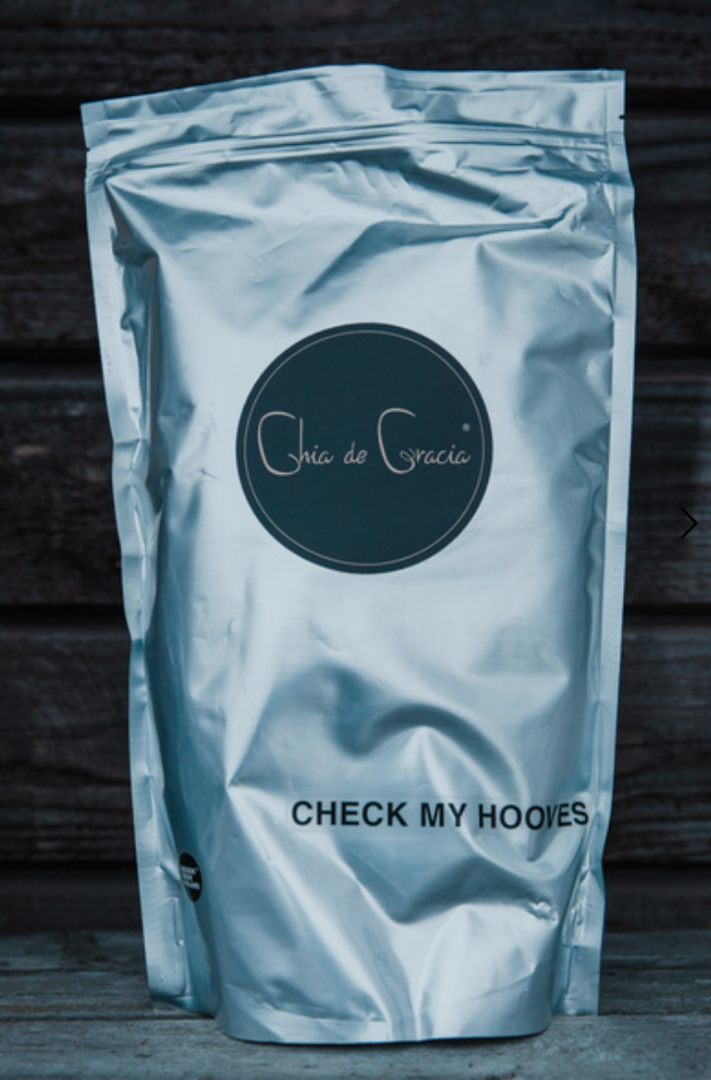

Chia de Gracia
Check My Hooves 2,4 kg
Delivery time 5-7 days
Couldn't load pickup availability
Check My Hooves – a versatile herbal blend for horse feeding
Check My Hooves is a 100% natural herbal blend that brings a versatile combination of seeds, plants, and minerals to the horse's diet. The product is designed as part of a balanced diet for situations where attention is needed on the intake of nutrients important for hoof structure.
Horse hooves are primarily composed of keratin, a protein built from sulphur-containing amino acids. Nutrients associated with hoof structure include in particular zinc, sulphur-containing amino acids, protein, biotin, and plant-derived minerals.
Check My Hooves combines these nutritional aspects from natural raw materials.
Composition
Check My Hooves contains chia, MSM (methylsulfonylmethane), dandelion root, bamboo, hawthorn berries, rosehip, bladderwrack, Icelandic moss, nettle, organic zinc chelate (350 mg/dl), and a pinch of love 🧡
Ingredients from a nutritional perspective
Chia
Chia seeds are rich in omega fatty acids, fibre, and plant protein. Protein provides amino acids to the diet, including the sulphur-containing amino acids found in keratin structure, such as methionine.
MSM
MSM (methylsulfonylmethane) is a source of organic sulphur. Sulphur is part of the structure of many proteins and is also found in keratin, which is present in, for example, hooves, coat, and skin.
Bamboo
Bamboo is naturally known as a silicon-containing plant. Silicon is a mineral found in plants and part of their natural mineral composition. Silicon occurs naturally in animal tissues.
Dandelion root and nettle
Dandelion and nettle are nutrient-rich plants that naturally contain minerals, plant protein, and various plant compounds. In the nutritional context of horse hooves, attention is often focused on adequate protein intake as well as nutrients such as zinc and biotin.
Rosehip
Rosehip naturally contains vitamins, carotenoids, and plant compounds known as polyphenols.
Bladderwrack and Icelandic moss
Seaweeds and lichens naturally contain a diverse range of minerals and plant-based bioactive compounds.
Zinc
Zinc is an important trace element found in numerous proteins and enzymes in the body. In horse feeding, zinc is associated with the nutrition of keratin-containing tissues.
Nutritional context from a hoof perspective
Horse hooves are primarily composed of keratin, a horn-like substance with a protein structure. Keratin structure contains sulphur-containing amino acids and several trace elements.
In horse feeding, the nutritional context related to hoof structure often considers, for example:
-
adequate protein and amino acid intake
-
sulphur-containing compounds, which are found in keratin among others
-
zinc, which is part of the structure of many proteins and enzymes
-
nutrients such as biotin
Check My Hooves brings these nutritional aspects into the horse's diet through plant-based raw materials, organic sulphur, and zinc.
Dosage
Horse approx. 500 kg
1–1,5 dl per day mixed into the feed.
1 dl ≈ 75 g
Contains approximately 350 mg of zinc.
Additives / kg
Nutritional additives
Zinc (3b607) 4700 mg
Average nutritional values / 100 g
Crude protein 19 g, Crude fat 10,3 g, Crude fibre 16 g, Ash 12,4 g, Moisture 6,7 %
Additional information:
Studies on hoof nutrition
The structure and nutritional background of horse hooves have been examined in several studies. Studies have, for example, analysed the mineral composition of hoof horn as well as the proportion of amino acids and proteins in hoof structure. Zinc and other trace element concentrations in hoof tissue have also been compared between different horses. Studies have examined the relationship between dietary mineral composition and hoof mineral concentrations. For example, a study conducted on foals found a connection between diet and the zinc and copper concentrations in the hoof capsule.
Studies have also observed that the chemical properties of the hoof reflect the horse's nutrition and the nutrient composition of the diet.
Spörndly-Nees E. et al. 2023.
Chemical composition of horse hooves with functional properties. Journal of Animal Science.
Rueda-Carrillo G. et al. 2022.
Comparison of the mineral profile of two types of horse diet and their impacts on hoof tensile strength. Animals.
Silva P.M. et al. 2022.
Influences of season and region on calcium, copper and zinc levels in the hoof capsule of foals. Equine Veterinary Journal.
Huang W. et al. 2019.
The equine hoof wall. Veterinary and Comparative Orthopaedics and Traumatology.
Share