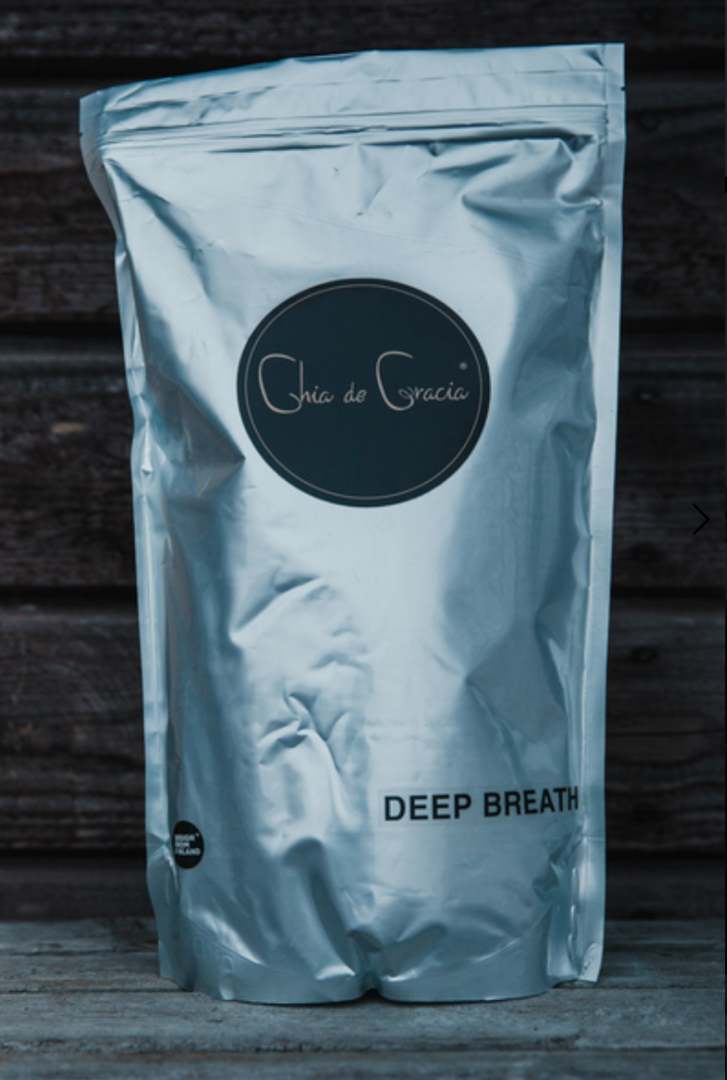

Chia de Gracia
Deep Breath 1,7 kg
Delivery time 5-7 days
Couldn't load pickup availability
Deep Breath herbal blend for horses
Deep Breath is a herbal blend containing several herbs, suitable as part of the daily diet when needed or for seasonal use.
The product is used as part of a horse's supplementary nutrition in situations where dietary variety and optimising nutrient intake are important, such as during long transports, varying stable conditions, dustiness, poor stable air quality, or increased physical exertion.
In such situations, the overall diet and adequate nutrient intake play a key role in the horse's normal physiology. The diverse herbal composition brings compounds naturally found in plants, fibre, as well as small amounts of vitamins and minerals as part of normal nutrient intake.
Deep Breath contains thyme, garlic, marshmallow root, anise, liquorice root, peppermint, lichen, and a pinch of love 🧡 .
Nutrients and natural composition of plants
Deep Breath contains several herbs whose composition is based on compounds naturally found in plants, fibre, as well as small amounts of vitamins and minerals.
Thyme also contains essential oils, such as thymol, as well as small amounts of minerals, such as zinc (approx. 6–7 mg / 100 g).
Vitamin A contributes to the normal structure of epithelial tissues in the body.
Vitamin C contributes to normal antioxidant function in the body.
Peppermint naturally contains essential oils. Its essential oil consists of several compounds, of which menthol is the most significant by quantity (typically 20–40% of the essential oil). Other compounds include menthone, menthyl acetate, limonene, and 1,8-cineole.
Anise contains essential oil, the main compound of which is anethole (typically 80–95% of the essential oil). In addition, smaller amounts of compounds such as estragole and linalool have been identified in anise.
Liquorice root contains compounds naturally found in plants, such as glycyrrhizic acid (a triterpene saponin), flavonoids, and polyphenols. In addition, liquorice root contains small amounts of B-group vitamins and vitamin E as part of the plant's natural composition.
Iceland moss contains abundant mucilage-forming polysaccharides (approx. 60–70% of dry matter) as well as small amounts of minerals.
Marshmallow root naturally contains mucilage-forming polysaccharides that swell in liquid, forming a gel-like structure.
Garlic contains sulphur compounds as well as small amounts of minerals, such as selenium and zinc, as part of the plant's natural nutrient content. According to a Finnish equine study, garlic has positive effects on horses' respiratory tracts*.
Dosage:
horse 500 kg:
0,5 - 1 dl per day mixed into the regular feed.
Steeping in warm water helps open up the herbs. The dose can also be divided into two servings, given both morning and evening. If needed, the dose can be doubled for a short period.
1 dl weighs approx. 25g. At a one-decilitre dosage, the package lasts 68 days.
Not for pregnant mares. If the horse is on other medication, it is advisable to consult a veterinarian about the use of marshmallow root, as it may affect the absorption of medicines.
Average nutritional values per 100g:
Crude protein 11,5%, crude fat 5%, crude fibre 24 %, ash 7%, moisture 9%
*** Anti-doping screening (FCS/HSPS)
This product has been analysed using FCS/HSPS screening methods for selected contaminants and substances that are monitored in international competition.
FCS screening is specifically targeted at conventional feed raw materials and covers several known risk substances, such as caffeine, theobromine, morphine, scopolamine, theophylline, atropine, and hordenine.
HSPS screening is designed for plant- and herb-based raw materials, where the variation of natural compounds is greater, and it extends the analysis to cover several other similar substances, such as reserpine, ephedrine, and capsaicin.
Screening is part of product quality management and transparency in situations where competition use requirements are also taken into account in the diet.
Certificates of analysis available upon request.
Related information:
Several equine studies have examined the composition of nutrients and phytochemical compounds found in herbs and plants, as well as their use as part of equine feeding. These studies have addressed, among other things, the nutritional properties and chemical profiles of garlic, thyme, and mint plants.
The studies do not directly concern this product, but provide general background information on the composition of the raw materials.
The study examined the addition of dried garlic to equine diets in a research setting. The results indicate that long-term supplementation of dried garlic at 32 mg/kg body weight supported respiratory well-being.
The study evaluated the use of a thyme-containing herbal preparation in the feeding of riding horses in a research setting. According to the study, the use of thyme-containing nutrition supported lung function.
This study evaluated an herbal combination containing garlic, mint, comfrey, anise, fennel, liquorice, thyme, and hyssop. These research findings indicate that the herbal combination has the potential to support normal respiratory function in horses.
Long transports always pose a risk to the horse's sensitive respiratory system. During long transports, it is beneficial if the horse can eat with its head lowered, allowing the respiratory tract to clear normally and reducing bacterial adhesion to the mucous membranes.
Share