
Chia de Gracia
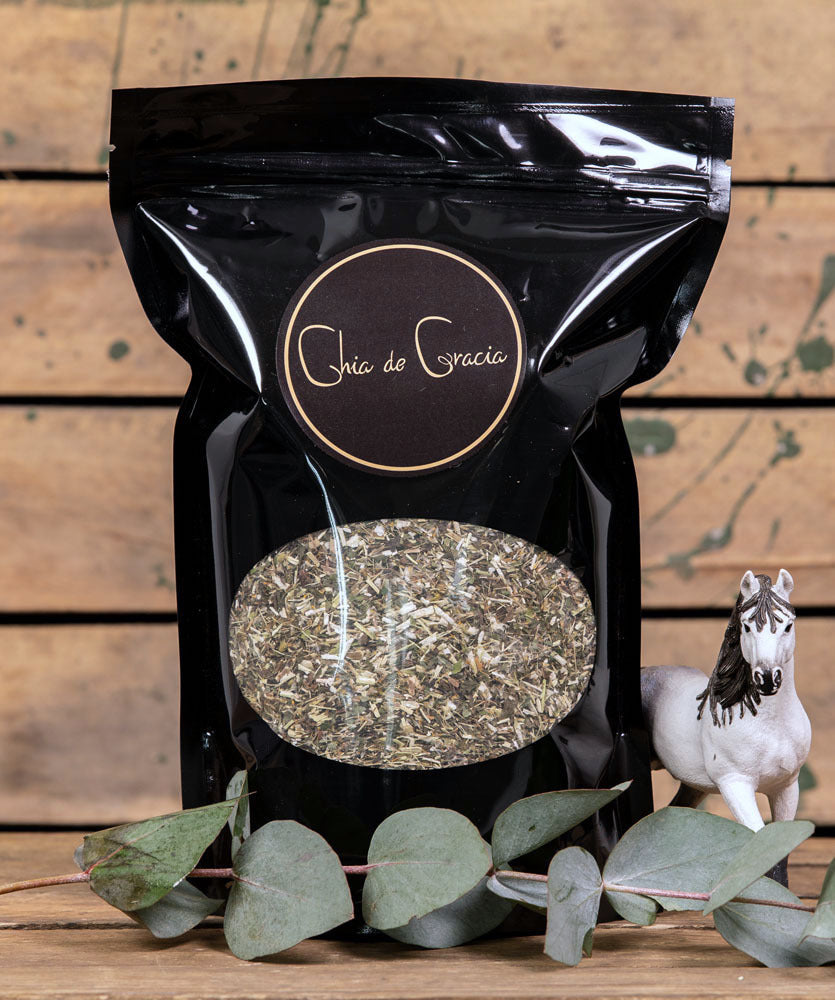
Golden Rod 300g
Delivery time 5-7 days
Couldn't load pickup availability
Golden Rod (Solidago virgaurea) – as part of the diet of horses and dogs
Golden rod is a traditionally used plant whose use in animal feeding is based on its phytochemical composition and the plant's own compounds. Dried golden rod is suitable for use as part of a varied and herbal-based diet for horses and dogs, used judiciously and as a course.
The use of golden rod in feeding is focused on short-term supplementation, not continuous use. The plant is potent in its content, which is why dosage and the length of the usage period should be followed carefully.
The plant's natural compounds as part of nutrition
Golden rod flowers naturally contain several of the plant's own compounds, such as saponins, tannins, flavonoids, phenolic compounds, and bitter compounds. The total content of bitter compounds is typically around 0,2–1,0 % of dry matter.
These compounds are part of the plant and occur together with dietary fibre and minerals. In herbal-based feeding, such compounds complement the composition of the diet and increase dietary variety. The use and benefits of the plant are based on its overall composition, not on individual compounds.
Bitter compounds and the overall diet
Golden rod contains dietary fibre as well as the plant's own bitter compounds, which affect the structure of intestinal contents as part of a fibre-rich diet. Adequate intake of fibre and fluids is an important part of a balanced diet, which is why when using golden rod, it must be ensured that the animal always has sufficient fresh drinking water available.
Use as a course
Golden rod is recommended for use in short courses, for periods of no more than approximately 10–14 days. Long-term or continuous use is not recommended. The use of the plant is based on traditional dietary use and considered supplementation.
Notes regarding use
Not recommended for animals with chronic kidney diseases. Not recommended for pregnant animals
The dosage should not be exceeded. Always ensure adequate water intake during use.
Dosage:
Horses (approx. 500 kg):
2–4 tbsp per day as part of the diet (approx. 8–16 g)
Dogs:
1/3–1 tsp per day depending on the dog's size
(indicative dose approx. 0,1–0,25 g / kg body weight)
Measurement information:
1 tbsp ≈ 4 g
Nutrients and the plant's natural compounds (naturally, indicative):
Dried golden rod (Solidago virgaurea) naturally contains, among others:
saponins approx. 1–3 %, tannins approx. 3–6 %, bitter compounds approx. 0,2–1,0 %, flavonoids and phenolic compounds approx. 0,5–2 %, dietary fibre (total fibre typically approx. 25–40 g/100 g), as well as minerals such as potassium, calcium, and magnesium.
Natural variation in content typical of natural products is possible depending on the growing location, harvest, drying method, and plant parts used.
Composition: 100 % dried golden rod (Solidago virgaurea).
No additives.
Background information and sources
The phytochemical composition and traditional use of golden rod (Solidago virgaurea) have been discussed in numerous pharmacognostic and botanical sources. The publications listed below provide background information on the compounds found in the plant and their role in the overall nutritional context. They should not be used as the basis for claims regarding the treatment of diseases in individual animals.
Wichtl, M. & Bisset, N.G. Herbal Drugs and Phytopharmaceuticals. Medpharm Scientific Publishers.
Braun, L. et al. (1997). German Standard License for herbal drugs.
ESCOP Monographs (1997). Solidaginis herba.
Ravintolisawiki.fi – Golden Rod
Share