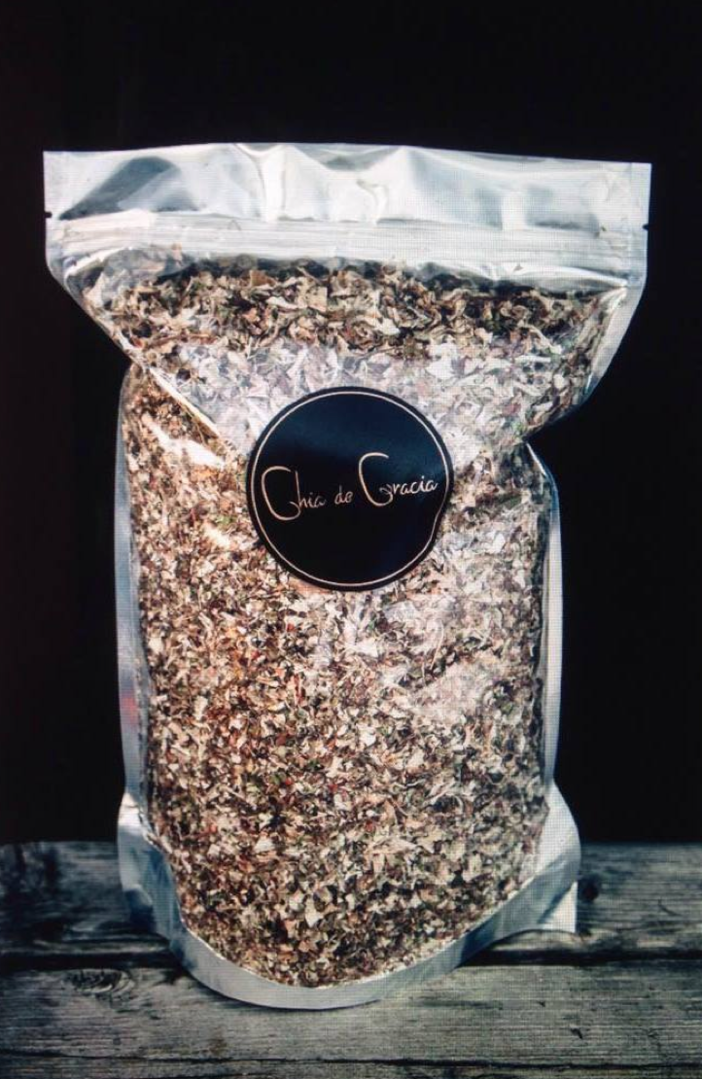

Chia de Gracia
Islandic Moss 400g
Delivery time 5-7 days
Couldn't load pickup availability
Icelandic Moss for Horses (Cetraria islandica)
Icelandic moss is a traditionally used lichen species utilised as a feed ingredient particularly for its natural mucilage and gently acting fibre structure. Icelandic moss is suitable as part of horse feeding as a complementary raw material when you want to add plant-based fibre and naturally occurring plant compounds to the diet. Just a few tablespoons of Icelandic moss supplement the diet with the plant's many natural minerals.
What is essential about Icelandic moss from a feeding perspective?
The natural composition of Icelandic moss includes:
-
mucilage-forming polysaccharides (lichen polysaccharides)
-
crude fibre and structural carbohydrates
-
bitter compounds and lichen acids (compounds typical of lichens)
-
naturally small amounts of vitamins and minerals
Mucilage forms a gel-like structure with water, which is a characteristic property of many mucilage-containing plant products.
Vitamins – nutritional background information
Icelandic moss naturally contains small amounts of vitamins as part of the plant's natural composition.
Vitamin A is a well-known vitamin in nutrition, playing a role in the normal function of vision, skin, mucous membranes and the immune system.
B-group vitamins are water-soluble vitamins that are generally not stored in large amounts in the body, but are obtained regularly from the diet. B vitamins participate in numerous metabolic processes and nervous system functions.
Icelandic moss also contains ergosterol, which is a precursor form of vitamin D found in the plant kingdom. Vitamin D is essential in nutrition for calcium and phosphorus metabolism, among other things.
Use and dosage
Start with a small dose and increase the amount gradually, taking the horse's individual response into account.
Horse (approx. 500 kg): 2–5 tbsp / day
1 tbsp ≈ 4 g
Practical tip: Mix, for example, into slightly moistened feed or mash so that the lichen blends in evenly.
Note on concurrent use
Products that form a large amount of mucilage may theoretically slow the absorption of other substances, which is why simultaneous administration of medications should be timed separately. 1/2–1 h apart.
Composition
Ingredients: 100 % Icelandic moss (Cetraria islandica), dried and ground
No additives or preservatives.
Analytical ingredients (approximate):
Crude fibre: approx. 13 %, Minerals (naturally occurring, approximate): Calcium: 0,39 , Phosphorus: 0,04 %, Sodium: 0,01 %
Research and background information (references)
Research and compiled literature on Icelandic moss focuses particularly on its polysaccharides (mucilage-forming compounds) and secondary compounds typical of lichens (e.g. lichen acids). A comprehensive review of the Cetraria genus describes the key compounds and traditional usage history of Icelandic moss and also references animal applications.
From an equine perspective, Icelandic moss has also been discussed in patent literature as part of horse feed and blend solutions (not as research evidence, but as a historical reference that the raw material has also been examined for use with horses).
In addition, EMA assessment and monograph materials compile the known properties and composition of Cetraria islandica (from a herbal medicine perspective). These sources are used here as background information on the composition of the raw material, not as the basis for feeding claims.
References
-
European Medicines Agency (EMA). Final assessment report on Cetraria islandica (L.) Acharius s.l., thallus (2014).
-
EMA/HMPC. Assessment report on Cetraria islandica… (background notes on the use of mucilage-forming preparations, among other things) (2014).
-
Patents. DE3229086A1 – Medicine for coughs and other disorders… and feedstuff for horses produced using the same (1984).
-
Lutsak et al. The Genus Cetraria s. str.—A Review of Its Botany, Phytochemistry, Traditional Uses and Pharmacology (2022).
-
EMA. Community herbal monograph (draft) on Cetraria islandica… (2014).
Share