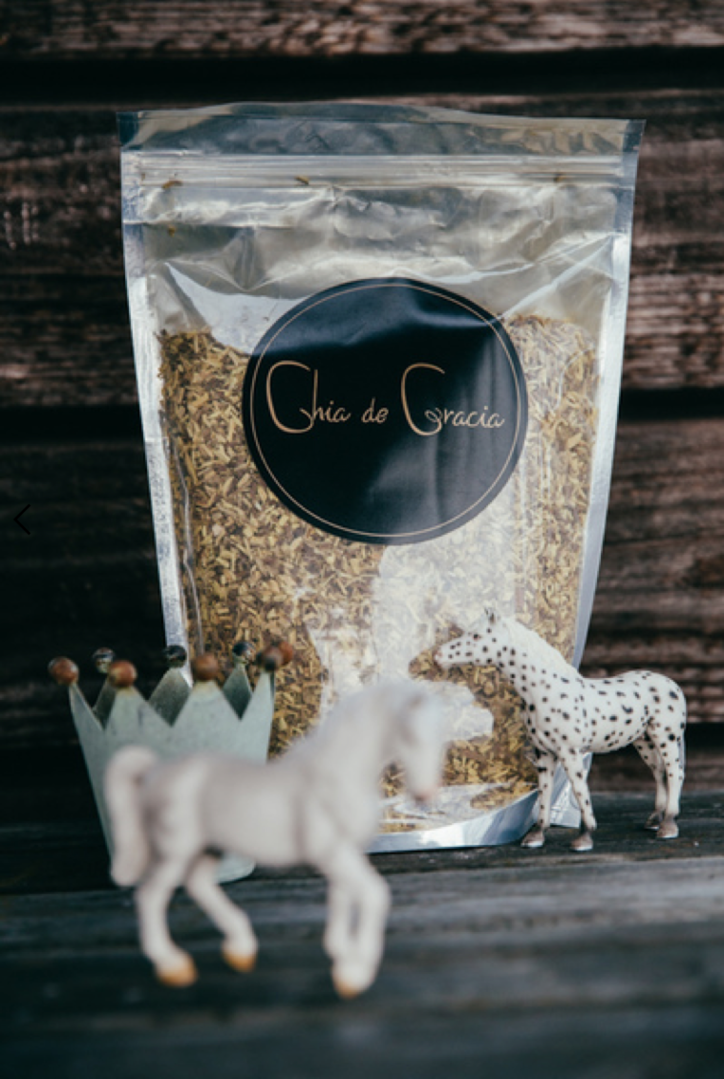

Chia de Gracia
Liquerice root 800 g
Delivery time 5-7 days
Couldn't load pickup availability
Liquorice root – an aromatic and palatable plant as part of your horse's diet
Liquorice root (Glycyrrhiza glabra) is known for its natural sweetness and pleasant flavour.
It is highly palatable for many horses and therefore a popular part of herbal blends when you want to add more variety and natural flavour to the diet.
The sweetness of liquorice root comes from glycyrrhizin, a compound naturally found in the plant and approximately 30–50 times sweeter than sugar. Thanks to this, liquorice root brings a soft sweetness to the diet without added sweeteners and serves as a plant-based option for improving palatability.
Liquorice root as part of a varied diet
Liquorice root is traditionally associated with herbal feeding as part of a balanced approach. Its use is based on the plant's natural composition and long history of use.
Dusty stable environments, dry indoor feeding periods and changes in diet are situations where the overall diet is often reviewed more broadly. In such cases, plant-based raw materials can be used as part of a varied herbal diet.
Mucous membranes are part of normal equine physiology and belong to the surface structures of the respiratory and digestive tract. Liquorice root is traditionally included as part of the diet in these contexts due to its phytochemical profile.
Natural composition of liquorice root
Liquorice root naturally contains:
-
Glycyrrhizin (approx. 2–9 %)
-
Flavonoids and phenolic compounds (approx. 1–2 %)
-
Small amounts of coumarins and essential oils (< 0,1 %)
Content levels vary depending on the origin and harvest of the raw material.
These compounds are a natural part of the structure of liquorice root and primarily influence its taste and sensory properties.
Dosage:
Horses (approx. 500 kg):
5–25 g per day as part of the diet
Measurement info:
1 dl ≈ 25 g
Please note
Not recommended for pregnant animals.
Natural products are always used as part of the overall diet.
Composition
100 % liquorice root (Glycyrrhiza glabra).
No additives or preservatives.
Vitamins (naturally occurring, approximate values / 100 g)
Thiamine (B1): approx. 0,05–0,08 mg, Riboflavin (B2): approx. 0,06–0,10 mg, Niacin (B3): approx. 0,8–1,3 mg, Pantothenic acid (B5): approx. 0,3–0,6 mg, Biotin: approx. 5–15 µg, Folate (B9): approx. 20–35 µg, Vitamin E: approx. 0,4–0,8 mg
Minerals (naturally occurring, approximate values / 100 g)
Potassium: (approx. 800–1200 mg), Calcium approx. 300–450 mg, Magnesium: approx. 150–200 mg, Iron: approx. 3–5 mg, Phosphorus: approx. 200–300 mg
Natural variation in content typical of natural products is possible depending on the origin, growing location and processing of the raw material.
Additional information and research background
Compounds found in liquorice root (Glycyrrhiza glabra), such as glycyrrhizin and other naturally occurring phytochemicals, have been examined in several scientific studies as part of various research settings. The publications below discuss the composition of liquorice root, the plant's natural compounds and their research contexts in literature related to animal feeding.
Some publications have examined the biological mechanisms of liquorice root and its compounds in respiratory research models, where parameters related to mucus formation and respiratory function have been assessed. These studies have reported observations on the behaviour of liquorice compounds under experimental conditions, such as cell models and animal models.
Liquorice root (Glycyrrhiza glabra) has also been examined in scientific studies as part of equine-related research settings, focusing on the use and composition of the plant's compounds in animal models.
Research references:
-
Glycyrrhizin and regulation of mucus-related mechanisms in experimental models
-
Review of bioactive compounds of Glycyrrhiza glabra
In one controlled study, the use of Glycyrrhiza glabra root extract was examined in a research model of the equine glandular stomach in a setting where a non-steroidal anti-inflammatory drug (phenylbutazone) was used. The study observed differences in mucous membranes compared to the control group.
The study does not concern this product as such, and no direct conclusions about dietary use can be drawn from it, but it provides scientific background information on the research history of liquorice root in equine-related studies.
-
The Therapeutic Actions of Traditional Chinese Herbal Medicine Used for the Treatment of Equine Respiratory Diseases
(a general review of research literature on herbs related to horses; does not concern this product) -
Ethnoveterinary medicines used for horses in Trinidad and in British Columbia, Canada
(a background review of plant research related to horses; does not concern this product)
Share