

Chia de Gracia EN
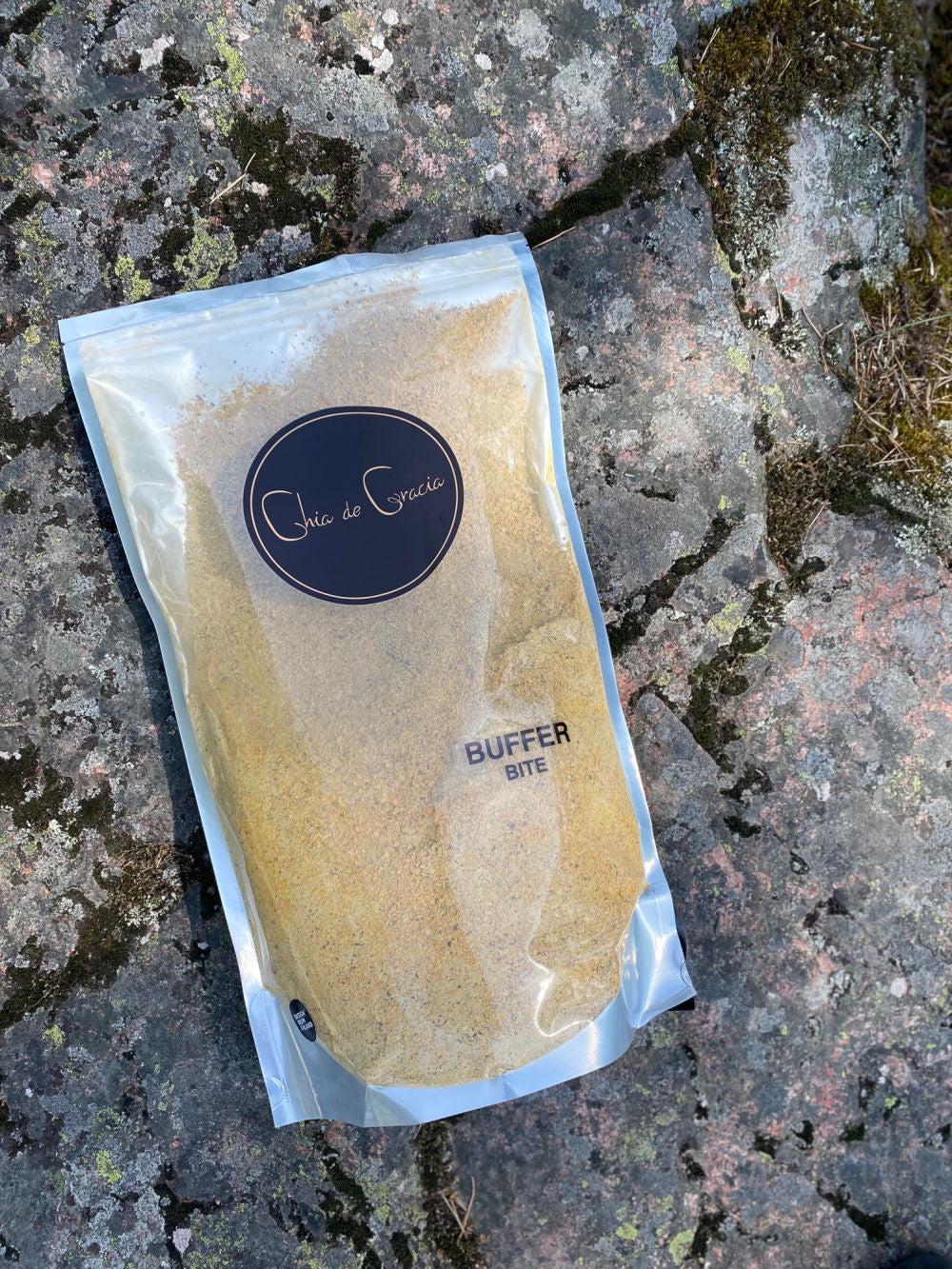
Buffer Bite
Delivery time 5-7 days
Couldn't load pickup availability
Lithothamnium calcareum seaweed, sea buckthorn meal and milled chia seeds — complementary feed for horses
This complementary feed combines seaweed, berries and seeds as part of the horse's balanced diet. The ingredients bring vitamins, omega fatty acids, minerals, fibre and nutrients naturally found in plants to the diet.
Lithothamnium calcareum is a seaweed that grows along the Atlantic coasts. It naturally contains abundant calcium as well as other minerals typical of seaweeds, such as magnesium and trace elements. Seaweeds are often used in animal feeding precisely because of their mineral content. Calcium is one of the dietary minerals that contributes to the body's normal acid-base balance. In the horse's stomach, pH naturally varies according to feeding rhythm and eating patterns, and feed materials containing minerals are part of this nutritional whole.
Sea buckthorn meal naturally contains vitamins, such as vitamin C and vitamin E, as well as carotenoids and polyphenols. These compounds belong to the natural antioxidants found in plants and are present in many berries.
Milled chia seeds are a fibre- and nutrient-rich seed, which also contains omega fatty acids. When chia is moistened with water, it forms a soft gel-like structure, which is a characteristic property of the seed. The fibre in chia belongs to soluble plant fibres, which are found in many seeds and plants.
Together, these raw materials bring the horse's diet natural minerals, fibres and nutrients typical of berries and seeds as part of a balanced diet.
The horse's stomach and feeding rhythm
The horse's digestion has evolved for continuous eating. In nature, the horse eats small amounts of forage throughout the day, so that the acid in the stomach regularly meets food and saliva.
The stomach produces acid continuously, and therefore the feeding rhythm and feed composition are part of the horse's normal digestive function. Forage, fibre and mineral-containing feed materials are part of this natural feeding balance.
Seaweeds, fibre-rich seeds and berries bring plant-based nutrients and minerals to the diet as part of a balanced diet.
Dosage
Horse 500 kg
70 g per day
Mix into water or into other moist feed.
Can be used as a course or on a periodic basis or as part of the daily diet.
Pack size
3 kg
Average nutritional values / 100 g
Energy 6,5 MJ/kg
Crude protein 7,5 %, Crude fat 9 %, Crude fibre 12 %, Ash 47 %, Moisture 7 %, Sugar 2,5 %, Calcium 16 %, Magnesium 1,2 %
Background information and studies
Lithothamnium calcareum seaweed has been examined in studies particularly from the perspective of its mineral composition. Seaweeds naturally contain abundant calcium as well as other minerals of marine origin.
Sea buckthorn (Hippophaë rhamnoides) is an exceptionally nutrient-rich berry, whose vitamins, carotenoids and polyphenols have been described in numerous nutrition studies.
Studies are used to understand the product's background information and the known composition of the raw materials.
References
Journal of Applied Animal Nutrition
The influence of feeding a high calcium algae supplement on gastric ulceration in adult horses.
Effects of seabuckthorn berry extract on prevention and treatment of gastric ulcers in horses.
Share