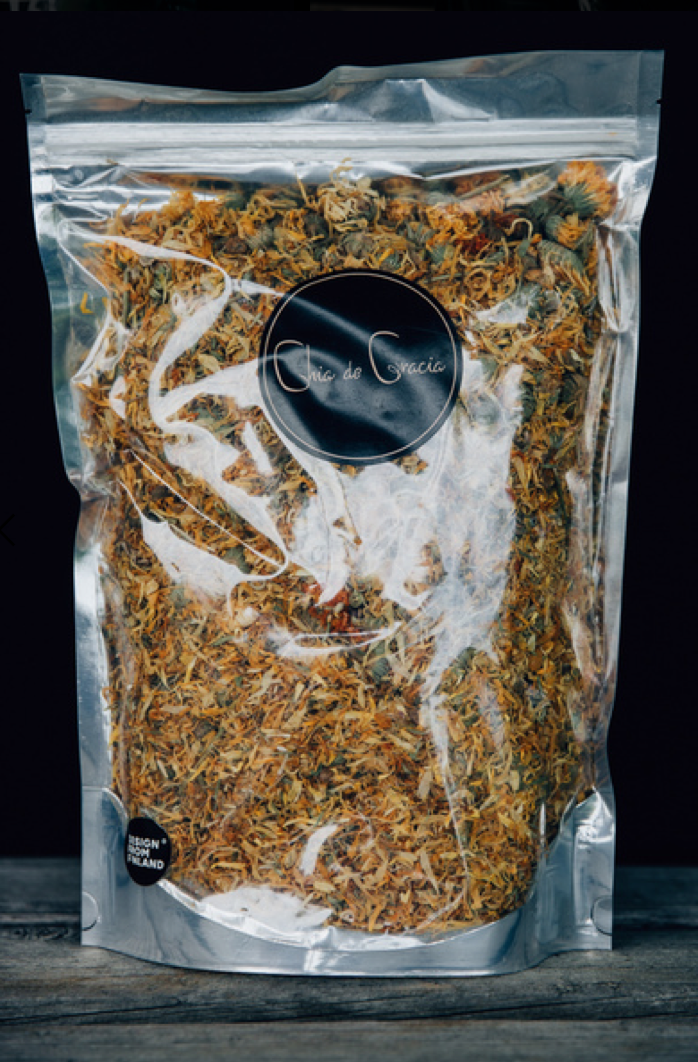

Chia de Gracia
Marigold 300 g
Delivery time 5-7 days
Couldn't load pickup availability
Marigold – a source of carotenoids and plant-based antioxidants as part of the diet for horses and dogs
Marigold (Calendula officinalis) is a versatile plant that has been traditionally used in animal feeding due to the many compounds naturally found in plants. Dried marigold is suitable for use as part of a balanced diet for horses and dogs when you want to add a herb containing plant-based pigment compounds and natural colour richness to the diet.
Carotenoids as part of the nutritional profile
Marigold is naturally rich in carotenoids. It contains, among others, beta-carotene, lutein and zeaxanthin, which are the plants' own pigment compounds.
Beta-carotene acts as a precursor to vitamin A. Vitamin A is part of normal nutrient intake and is generally associated with the animal's overall nutritional profile, which takes into account, among other things, the normal renewal of skin and surface structures as part of a balanced diet.
Seasonal variation and colour pigments
During the summer and grazing season, the composition of the diet changes naturally as the amount of green forage increases. At this time, the intake of plant-based pigment compounds, such as carotenoids, is often part of the natural feeding environment.
Dried marigold offers the opportunity to bring carotenoid-rich plant material into the diet also during other seasons.
Flavonoids and other plant compounds
Marigold also contains flavonoids, such as quercetin and isorhamnetin, which are natural polyphenolic compounds found in plants.
In addition, marigold contains triterpenoids, essential oils and polysaccharides.
Nutrients (naturally occurring, indicative)
Dried marigold naturally contains an abundance of the plant's own compounds. According to the literature, the total carotenoid content is typically around 200–350 mg/kg dry matter.
The flavonoid content is approximately 0,3–1,0 % and triterpenoid content approximately 0,1–0,4 %. The polysaccharide proportion is typically around 10–15 %. In addition, marigold contains essential oils (0,1–0,2 %), saponins and small amounts of vitamin C.
Natural variation in content typical of natural products is possible depending on the growing location, harvest, drying method and plant parts used.
Use as part of the diet
Marigold is suitable for use as part of a varied herbal diet for horses and dogs. It can be used on its own or combined with other plants at a comparable dosage. Suitable for use together with, for example, cleavers.
Dosage:
Horses (approx. 500 kg):
0,5–1 dl per day as part of the diet
Dogs:
small–large dog: 0,5 tsp – 2 tbsp per day
Always start with a small dose and increase the amount gradually if needed.
Measurement information:
1 tbsp ≈ 3 g
1 dl ≈ 13 g
Composition: 100 % dried marigold (Calendula officinalis).
No additives.
Important considerations regarding use
Not recommended for pregnant mares or other pregnant animals due to the plant's natural oestrogenic properties
Contains small amounts of salicylic acid; a 4-day withdrawal period is recommended for competition horses
Not suitable for animals with hypersensitivity to daisy family plants (Asteraceae)
Additional information and background
Supplement wiki: http://www.ravintolisawiki.fi/kehäkukka
Herb garden: http://www.yrttitarha.fi/kanta/kehakukka/
The Many Benefits of Calendula officinalis for Horses
Daisy family (plant family): https://fi.wikipedia.org/wiki/Asterikasvit
Share