

Chia de Gracia
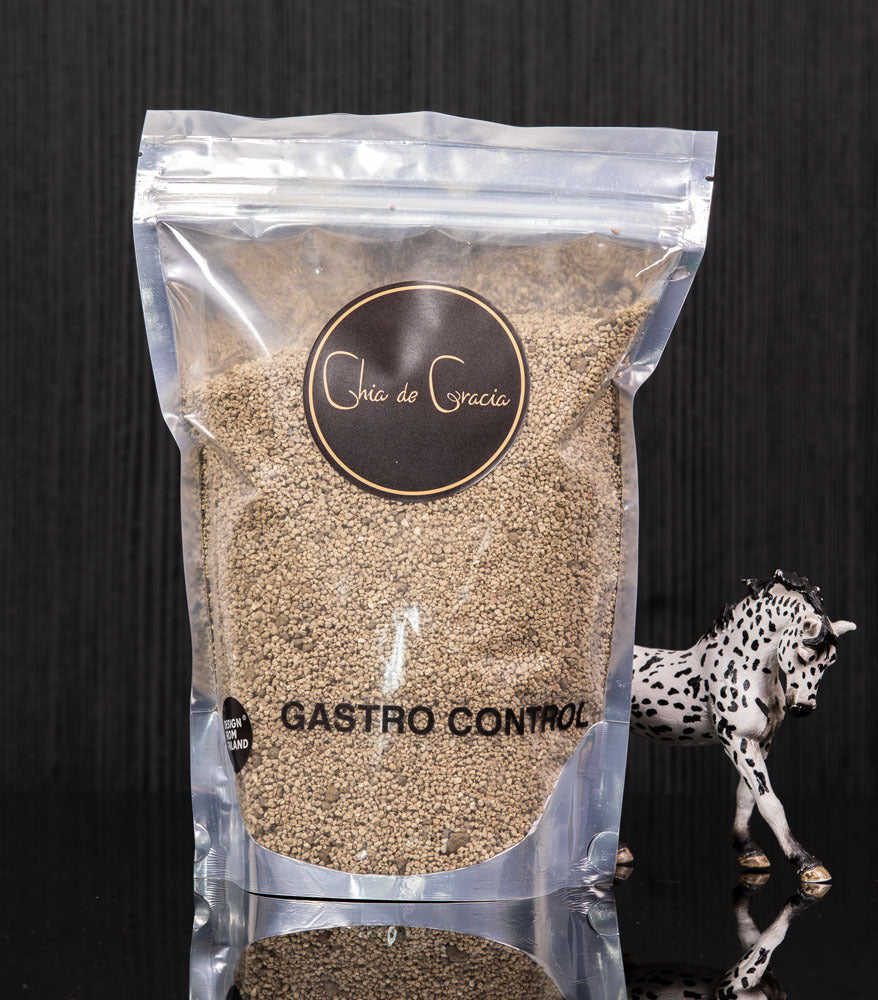
Gastro Control 1,5 kg
Delivery time 5-7 days
Couldn't load pickup availability
Gastro Control – mineral- and yeast-based complementary feed for horses
A horse's digestion is constantly at work, and the overall diet affects how smoothly day-to-day life runs in practice.
Changes in feeding, varying conditions, or physical stress may prompt a fresh look at the overall picture – what is fed, how, and at what rhythm.
Why Gastro Control
Gastro Control is a complementary feed that brings to the diet:
- mineral-based raw materials
- yeast
- marine-derived minerals
→ as part of a balanced and considered diet
Ingredients as part of the diet
Bentonite clay
Bentonite clay is a natural mineral used in feeding due to its natural physical properties.
Brewer's yeast (Saccharomyces cerevisiae)
Brewer's yeast is a natural source of B vitamins and amino acids.
It is commonly used in horse feeding as part of a balanced diet.
Lithothamnium calcareum algae
A marine-derived mineral that is rich in calcium and other minerals.
Charcoal
Charcoal is traditionally used in animal feeding as part of various nutritional solutions.
When is this product suitable for the diet
Gastro Control is often chosen in situations where:
- you want to clarify the structure of the diet
- the daily routine varies
- you want to add mineral- and yeast-based components to the diet
Composition
Bentonite clay, brewer's yeast (Saccharomyces cerevisiae), Lithothamnium calcareum algae, charcoal, and a pinch of love 🧡
Additives / kg
5581 calcium bentonite
4b1702 Saccharomyces cerevisiae NCYC Sc
2,5 × 10¹¹ CFU/kg
Nutritional values
Crude ash 68 %, Crude fibre 8,9 %, Moisture 4,4 %, Crude protein 3,7 %, Crude fat < 1 %, Sodium < 1 %
Dosage
Horse 500 kg
50 g / day
Ponies
25 g / day
1 dl ≈ 100 g
Note
This product contains charcoal.
Allow at least 2 hours before or after any medication to avoid interference with drug absorption.
Background information and studies
The use of yeast (Saccharomyces cerevisiae) in horse feeding has been examined in studies, particularly from the perspective of gut microbial activity and fibre fermentation.
The effect of diet on horse digestion and microbiota has been widely covered in nutritional research, where the overall diet is seen as a key factor.
Diets containing marine-derived minerals have been studied from the perspective of their mineral composition as part of horse feeding.
Studies are used to understand the background information and the known composition of the raw materials.
References
Journal of Applied Animal Nutrition (2016)
The influence of feeding a high calcium algae supplement on gastric conditions in adult horses.
Jouany, J.P. et al. (2008)
Effect of live yeast culture supplementation on hindgut microbial communities and fermentation in horses.
Journal of Animal Science.
Julliand, V., Grimm, P. (2017)
The impact of diet on the hindgut microbiome and digestive health of the horse.
Animal.
Share